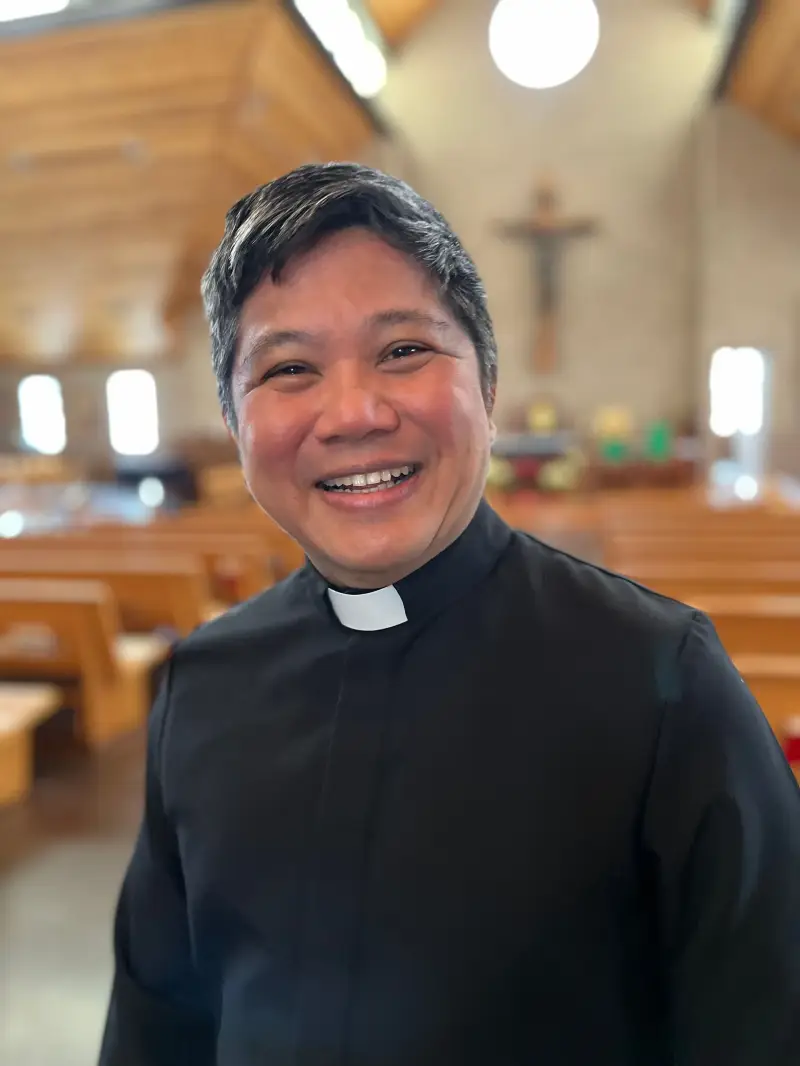
Pastor's Message
September 13, 2026
Twenty-fourth Sunday of Ordinary Time
Dear brothers and sisters,
Last Sunday, Jesus taught us about fraternal correction—the responsibility we have to help a brother or sister who has gone astray. Today, the Lord teaches us the other side of Christian love: forgiveness.
Peter asks Jesus, “Lord, if my brother sins against me, how often must I forgive him? As many as seven times?” Jesus answers, “Not seven times but seventy-seven times.”
Jesus is not giving us a number to count. He is telling us that there should be no limit to our forgiveness. We are called to forgive again and again.
I once heard a saying attributed to an ancient Japanese doctor: If you want to live a long and happy life, do not let grudges grow in your heart. There is wisdom in that. When we hold on to anger, resentment, and hatred, we carry a heavy burden inside us.
Forgiveness allows our hearts to be free.
So, my brothers and sisters, do not let the day pass without forgiving. If someone has hurt you, try to forgive. If there is a misunderstanding, try to make peace. We do not know what tomorrow will bring. It is better to go to sleep with a peaceful heart and a clean conscience.
This is especially important in our families. In a family, it is not simply tolerance—it is charity. Brothers and sisters will sometimes have petty fights. That is part of family life.
I remember when my brothers and I were younger teenagers. When Mom and Dad were not home, sometimes we would fight. My oldest brother would even take my side. But when my dad
came home, he knew something had happened! He punished us with a belt—four times on the backside.
I tried to protect myself by putting a piece of cardboard behind me! But my dad knew exactly what I was doing. He removed the cardboard—and I received four more!
We laugh about these things now, but they remind us that families have disagreements. We may hurt one another. We may say things we regret. But we need to forgive one another.
Why?
Because forgiveness brings peace.
When we forgive, we can sleep peacefully at night. Our conscience is clean. We are no longer carrying anger in our hearts. We become free to love again.
And this is one of the most concrete ways we can say, “I love God.” We say it not only with our prayers or our words, but by loving the person beside us—even when that person has hurt us.
Jesus reminds us that God has forgiven us so many times. The debt we owe God is far greater than anything another person could owe us. If God is so merciful toward us, then we must learn
to be merciful toward one another.
Forgiveness does not mean that what happened was right. It does not mean that we forget everything or allow someone to continue hurting us. Forgiveness means that we choose not to
allow anger and resentment to control our hearts. We place the hurt in God's hands and choose peace.
My brothers and sisters, Jesus asks us today: How many times should I forgive?
The answer is: As many times as necessary.
Let us not count how many times we have forgiven. Let us remember how many times God has forgiven us.
May our homes, our families, and our parish community be places where forgiveness is always possible.
Forgive. Let go. Make peace. Love your brothers and sisters. Because when we love our neighbor, we are truly showing our love for God.
In Christ,
Fr. Robin